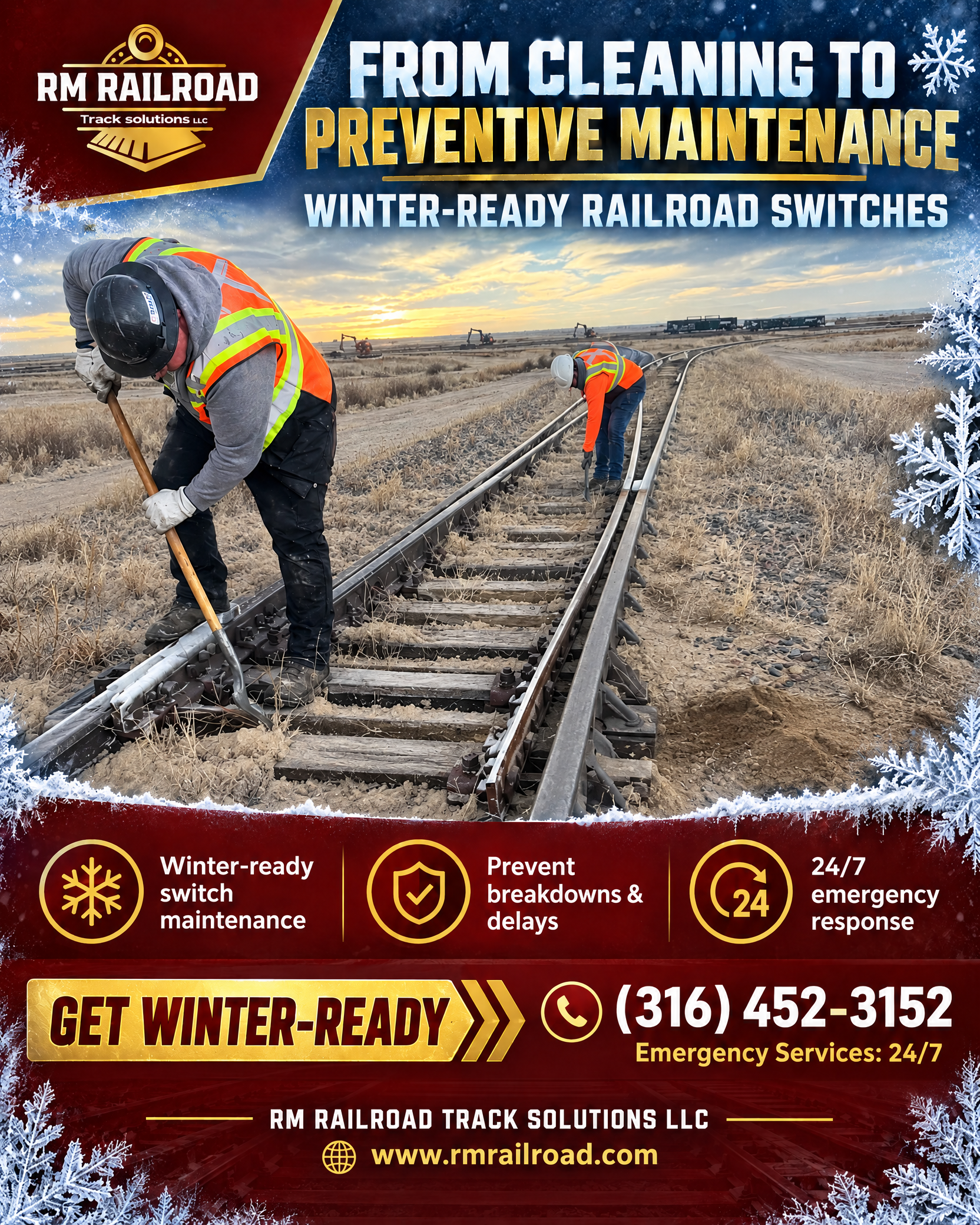

Railroads quietly keep economies moving. From daily commuter lines to long freight routes, rail systems handle enormous responsibility every single day. What most people never see is the constant work required behind the scenes to keep tracks safe, trains reliable, and workers protected. That is where smart solutions for railroad maintenance and safety services play a critical role. With aging infrastructure and growing demand, reliability has never mattered more.
Why Railroad Maintenance and Safety Cannot Be an Afterthought
Rail systems operate under heavy loads and harsh conditions. Weather, vibration, and time all take a toll on tracks, signals, and equipment.
According to the Federal Railroad Administration, track-related issues remain one of the leading causes of train accidents in the United States. This data highlights a simple truth. Proactive maintenance and safety planning prevent incidents before they happen.
Effective maintenance reduces:
-
Service disruptions
-
Equipment failure risks
-
Costly emergency repairs
-
Safety hazards for crews and passengers
The Shift Toward Preventive Maintenance Strategies
Traditional railroad maintenance often relied on scheduled inspections and reactive repairs. Today, the industry is shifting toward preventive and predictive models.
Modern approaches focus on:
-
Regular track geometry assessments
-
Early detection of wear and fatigue
-
Planned maintenance windows
-
Data-driven decision making
These methods form the backbone of dependable solutions for railroad maintenance and safety services because they reduce surprises and extend asset life.
Advanced Technology Improving Track Safety
Technology has transformed how railroads monitor and maintain infrastructure. Automated tools now detect issues faster and more accurately than manual inspections alone.
Common technologies include:
-
Track inspection vehicles with sensors
-
Ultrasonic rail flaw detection
-
Drone inspections for hard-to-reach areas
-
Real-time monitoring systems
The Association of American Railroads has noted that technology-driven inspections significantly improve defect detection rates. Earlier detection allows maintenance teams to act before small issues become major risks.
Workforce Training and Safety Culture Matter
Even with advanced tools, people remain at the heart of railroad safety. Skilled workers who understand both technology and physical infrastructure are essential.
Strong safety programs focus on:
-
Ongoing training and certification
-
Clear safety procedures
-
Fatigue management
-
Open reporting of near misses
OSHA and industry safety organizations consistently emphasize that strong safety cultures reduce workplace injuries. Human-centered planning is a core element of successful solutions for railroad maintenance and safety services.
Maintaining Signals and Communication Systems
Track safety is only one piece of the puzzle. Signals and communication systems guide train movement and prevent collisions.
Key maintenance areas include:
-
Signal timing and visibility checks
-
Switch and crossing inspections
-
Communication network reliability
-
Backup system testing
The National Transportation Safety Board has repeatedly stressed the importance of signal integrity in preventing rail incidents. Regular testing and modernization help avoid failures that can disrupt entire corridors.
Managing Environmental and Weather Challenges
Railroads operate in all seasons and climates. Extreme heat, cold, flooding, and storms can damage infrastructure quickly.
Effective planning includes:
-
Heat monitoring to prevent rail buckling
-
Drainage management to reduce washouts
-
Vegetation control along rights of way
-
Seasonal inspection schedules
Climate resilience is becoming an increasingly important part of long-term solutions for railroad maintenance and safety services, especially as weather patterns grow more unpredictable.
Coordinating Maintenance Without Disrupting Service
One of the biggest challenges in rail maintenance is working without stopping operations entirely. Coordination is critical.
Best practices include:
-
Scheduling maintenance during low traffic windows
-
Using modular repair methods
-
Communicating clearly with operations teams
-
Phasing projects to minimize downtime
Well-coordinated efforts maintain safety while keeping trains moving efficiently.
Regulatory Compliance and Documentation
Railroad operations are highly regulated for good reason. Compliance ensures safety standards are met consistently across networks.
Key compliance areas include:
-
Inspection documentation
-
Maintenance records
-
Worker certification tracking
-
Incident reporting
The Federal Railroad Administration requires detailed documentation, and accurate records also support long-term planning and audits. Reliable compliance processes strengthen overall solutions for railroad maintenance and safety services.
Cost Control Through Smart Asset Management
Rail infrastructure is expensive to build and maintain. Smart asset management helps control costs without compromising safety.
Effective strategies involve:
-
Prioritizing high-risk assets
-
Extending component life through maintenance
-
Reducing emergency repair expenses
-
Aligning budgets with data insights
Studies from transportation research institutions show that preventive maintenance often costs significantly less than reactive repairs over time.
The Long-Term Value of Reliable Railroad Safety Services
Railroads are long-term investments that serve communities and industries for generations. Maintenance and safety planning must reflect that long view.
When rail operators commit to proven solutions for railroad maintenance and safety services, they protect lives, cargo, and public trust. Reliable systems also support economic growth by keeping supply chains running smoothly.
Final Takeaway for Rail Operators and Stakeholders
Railroad safety is not the result of one inspection or one repair. It is the outcome of consistent planning, skilled teams, smart technology, and a culture that values prevention. As networks grow older and demands increase, thoughtful maintenance strategies become even more important. Investing in dependable solutions for railroad maintenance and safety services is not just about compliance. It is about building safer, stronger rail systems that perform reliably today and well into the future.